

- By admin
- 11 Jun 2026
- No Comments
When it comes to construction, manufacturing, or any DIY project, the choice of fasteners can make a world of difference. Among these options, stainless steel fasteners stand out for their durability and resistance to corrosion. But did you know not all stainless steel fasteners are created equal? The various grades available offer different levels of strength and versatility. Understanding these differences is crucial for selecting the right fastener for your specific needs. Let’s dive into the fascinating world of stainless steel fasteners and explore how their grades impact performance and application!
The Importance of Grades in Stainless Steel Fasteners
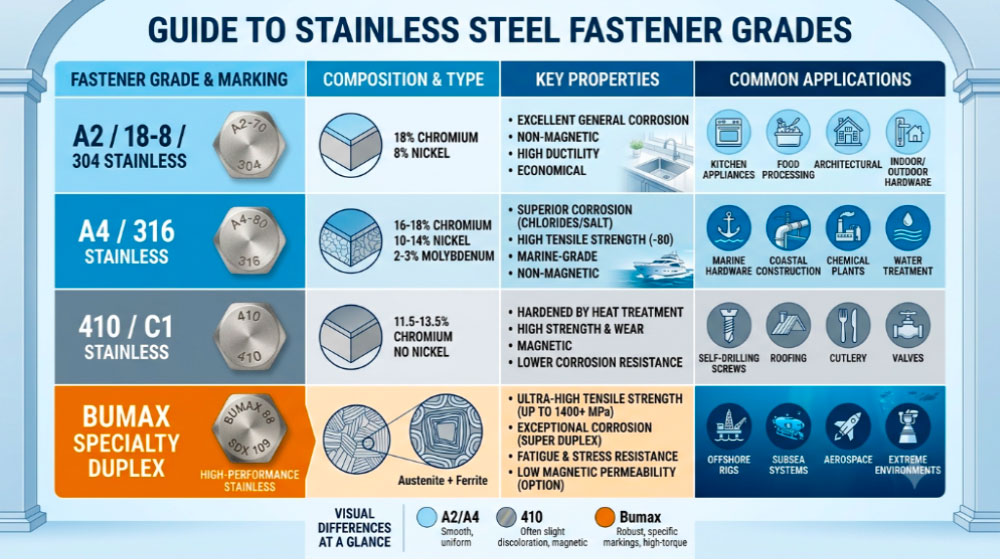
Choosing the right grade of stainless steel fasteners is crucial for ensuring durability and performance. Each grade has unique properties that make it suitable for specific applications. Grades determine factors like strength, corrosion resistance, and temperature tolerance. Using an inappropriate grade can lead to premature failure in critical settings. For instance, a lower-grade fastener might rust quickly in marine environments. Conversely, high-performance grades can withstand harsh chemicals without degrading.
Understanding these distinctions helps engineers and manufacturers select the most fitting option. This knowledge not only enhances product longevity but also ensures safety in various industries. In construction or automotive sectors, reliable fasteners are essential for structural integrity. Knowing how different grades perform allows professionals to make informed decisions tailored to their projects’ demands.
Grade 18-8 Stainless Steel Fasteners
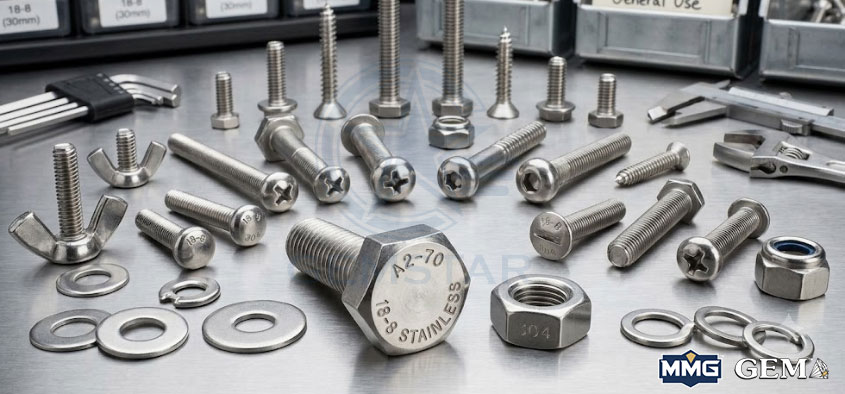
Grade 18-8 stainless steel fasteners are among the most widely used types in various applications. This grade is primarily made up of 18% chromium and 8% nickel, which provide excellent corrosion resistance. These fasteners balance strength and ductility quite well. As a result, they perform reliably in both indoor and outdoor settings. You’ll often find them employed in industries ranging from construction to automotive manufacturing.
One notable feature of Grade 18-8 is its ability to withstand oxidation at elevated temperatures. This makes it suitable for environments with fluctuating conditions. The ease of machining adds another layer of versatility, allowing for intricate designs without compromising structural integrity. While not as resistant to chloride pitting as other grades, such as Grade 316, its overall performance still meets many standard requirements effectively. Thus, these fasteners remain a popular choice for general-purpose use across diverse sectors.
Grade 304 Stainless Steel Fasteners
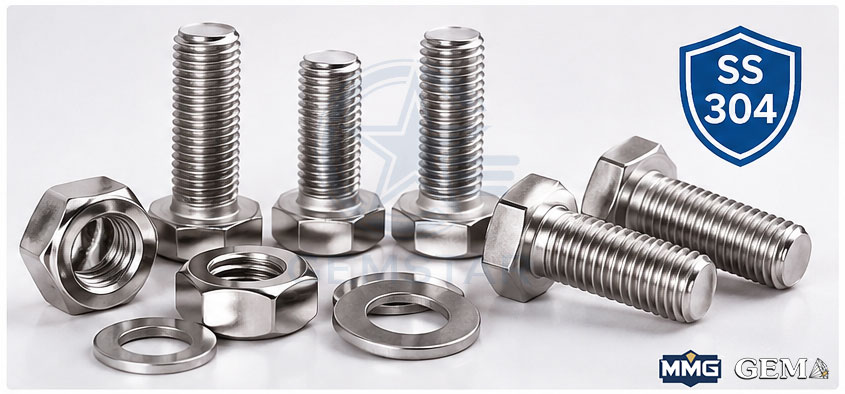
Grade 304 stainless steel fasteners are among the most widely used types in various industries. They offer excellent corrosion resistance, making them suitable for environments exposed to moisture and chemicals. This grade contains a balanced mix of chromium and nickel, which enhances its durability. It’s often chosen for applications in food processing, medical equipment, and marine settings due to its hygienic properties. One notable feature is that Grade 304 can withstand high temperatures without losing strength. This makes it ideal for use in heat exchangers and other high-heat applications.
While versatile, Grade 304 isn’t completely immune to rusting under certain conditions. In highly corrosive environments or when exposed to chlorides, it might not perform as well as some alternative grades like 316. Understanding these nuances helps ensure you select the right fastener for your specific needs.
Grade 316 Stainless Steel Fasteners
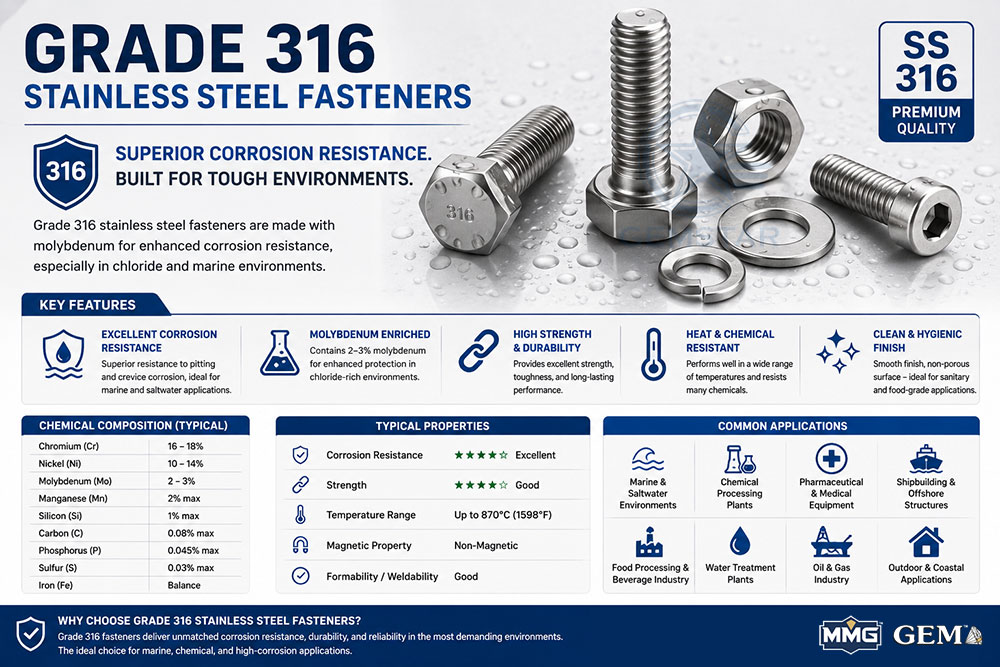
Grade 316 stainless steel fasteners are known for their exceptional resistance to corrosion. This makes them particularly valuable in marine environments or areas exposed to harsh chemicals. With a higher nickel content and the addition of molybdenum, Grade 316 offers improved durability compared to other grades. It is often referred to as “marine grade” stainless steel due to its ability to withstand saline conditions.
These fasteners maintain structural integrity even at high temperatures, making them suitable for various industrial applications. Their strength combined with corrosion resistance ensures longevity and reduces maintenance costs. When it comes to aesthetics, Grade 316 also shines; it has a smooth finish that enhances appearance while protecting against rust and staining. This versatility makes it a go-to choice across multiple sectors, from construction to food processing.
Other Common Grades and their Differences
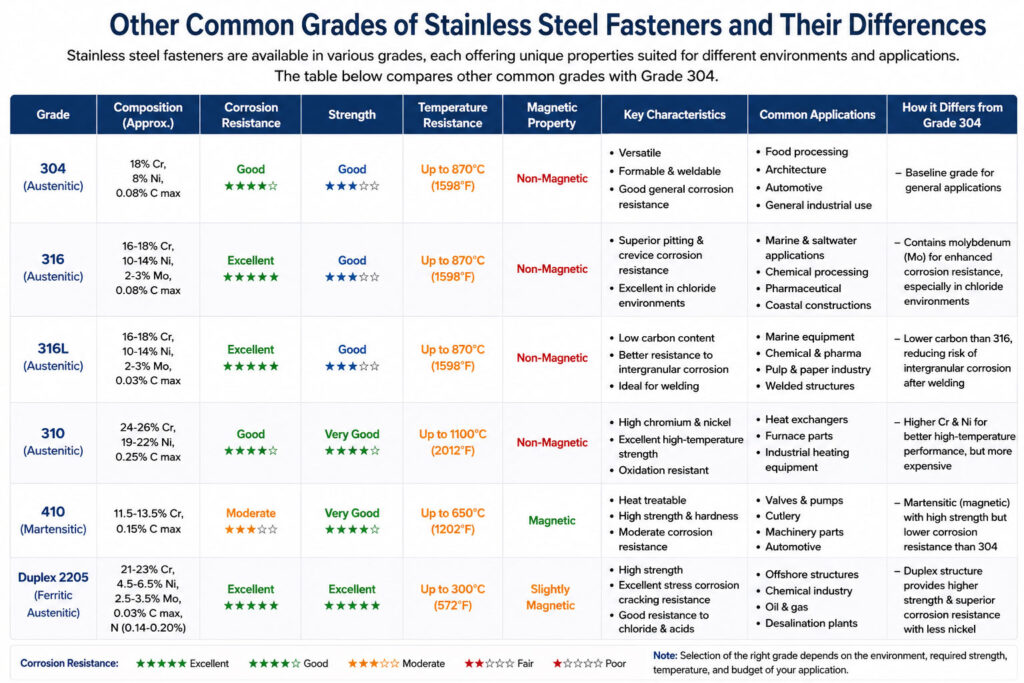
Beyond the well-known grades, several other stainless steel fastener grades are worth noting. Grade 410 is a martensitic stainless steel that offers good corrosion resistance but can be heat-treated for increased hardness. It’s ideal for applications where wear and tear are significant.
Grade 420, also martensitic, provides higher strength than 18-8 variants while maintaining decent corrosion resistance. It’s often used in cutlery and surgical instruments due to its ability to hold a sharp edge. For more specialized needs, there’s Grade 316L. This low-carbon version of 316 minimizes carbide precipitation during welding, making it suitable for critical applications in marine environments.
Grade A4 (also known as 316 stainless) stands out in aggressive settings like chemical processing plants due to its enhanced pitting resistance over standard grades like 304 or even regular 316. Each grade serves distinct purposes based on their composition and treatment processes.
Factors to Consider When Choosing the Right Grade
Choosing the right grade of stainless steel fasteners requires careful consideration. First, assess the environment where they will be used. Factors like humidity, temperature, and exposure to chemicals can greatly influence performance.
Next, think about mechanical properties such as strength and ductility. Different grades offer varying levels of tensile strength which may be crucial for your specific application. Corrosion resistance is another significant factor. If your project involves marine applications or harsh environments, opt for a higher-grade option like 316 stainless steel.
Cost is also essential higher grades often come with a price increase but provide longevity and reliability that can save money in the long run. Consider regulatory standards or certifications relevant to your industry. Meeting these specifications ensures safety and compliance while choosing the appropriate fastener grade.
Conclusion
Choosing the right grade of stainless steel fasteners is crucial for your project’s success. Understanding the differences among grades helps ensure durability and performance in various environments. Whether you opt for Grade 18-8, which balances corrosion resistance and strength, or Grade 316, known for its superior protection against saltwater, each has specific applications.
Other grades like 410 and 430 also have their place, particularly in less demanding environments. Always consider factors such as environmental exposure, load requirements, and cost when making your decision. By familiarizing yourself with these different grades of stainless steel fasteners, you’ll be better equipped to select the ideal option for your needs. Remember that quality fasteners not only enhance the integrity of your projects but can also lead to long-term savings by minimizing maintenance and replacement costs.