

Stainless Steel Coupling - Grade 202, 304, 316 - A2, A2-70
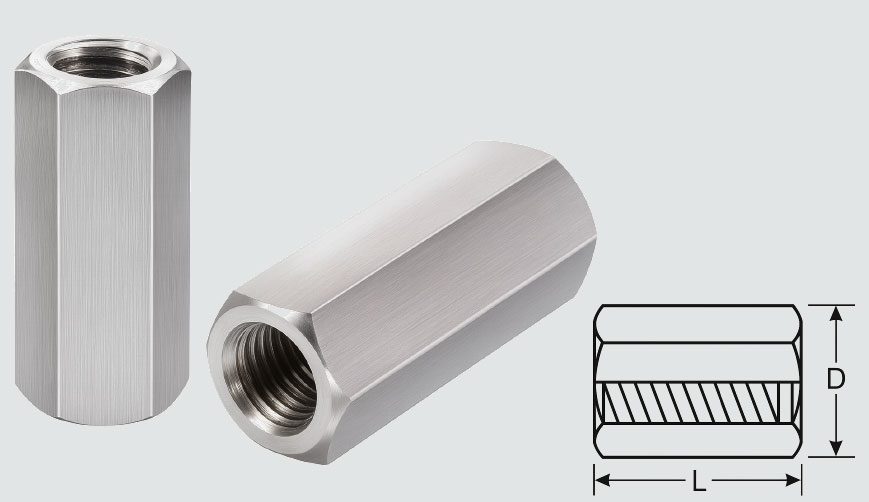
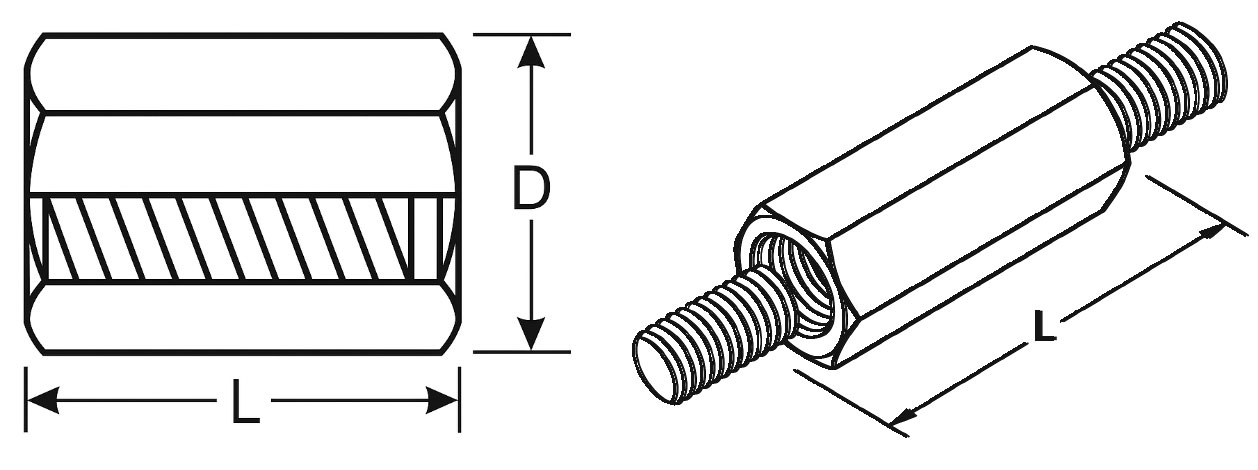
A coupling nut, otherwise referred to as a coupler or extension nut, is a fastening device that connects two threaded rods or studs. Essentially, it is an elongated nut with internal threads that enable the joining of two male threads. These nuts are frequently utilized to prolong the length of threaded rods or establish lengthier connections in various applications.
Coupling Technical Specification
| Attribute | Details |
| Shape | Hexagonal (most common), round, knurled |
| Thread Type | Right-hand (standard), left-hand, or both |
| Thread Standards | Metric (M6–M24), UNC, UNF, BSW, etc. |
| Materials | Carbon steel, stainless steel (304/316), brass, alloy steel, aluminum |
| Finishes | Zinc plated, hot-dip galvanized, plain, black oxide |
| Lengths | Varies by diameter (usually 1.5–3× the outer diameter of the rod) |
- Simple and quick extension solution
- Available in multiple thread types and finishes
- Strong, secure connections
- Allows for easy alignment and adjustment
- Extending threaded rods in structural assemblies
- Joining anchor bolts or threaded studs
- Mechanical maintenance and repairs
- HVAC and pipe supports
- Solar racking systems and construction frameworks
Coupling Nuts – Materials & Grades
| Material | Grade | Key Composition / Standards | Properties | Common Applications |
| Carbon Steel | Grade 2, 5, 8 | ASTM A563 / SAE J995 | Cost-effective, strong; available with zinc or black oxide coating |
Construction, general- purpose fastenings |
| Stainless Steel | SS 304 | 18% Cr, 8% Ni – A2-70 (metric) | Good corrosion resistance, non- magnetic, food-safe |
Outdoor use, food industry, general stainless applications |
| Stainless Steel | SS 316 | 16–18% Cr, 10–14% Ni, 2–3% Mo – A4-70 | Superior corrosion resistance, especially in marine/chloride environments |
Marine, chemical, coastal infrastructure |
| Stainless Steel | SS 316L | Low carbon version of SS 316 | Better weldability, reduced risk of carbide precipitation |
Welded joints, medical, pharmaceutical industries |
| Brass | CDA 360 or equivalent | Copper-zinc alloy | Good corrosion resistance, non- sparking, decorative look |
Plumbing, electrical, decorative hardware |
| Alloy Steel | ASTM A194 Grade 7/12 | Chromium-molybdenum steel | High strength, used in high- pressure/high-temp conditions |
Heavy machinery, power plants, pressure vessels |
| Aluminum | 6061-T6 | Magnesium & silicon alloy | Lightweight, corrosion-resistant, non-magnetic |
Aerospace, electronics, light structures |
| Hot-Dip Galvanized Steel | ASTM A563 | Low carbon steel + zinc coating | Excellent for outdoor & structural use, highly corrosion-resistant |
Structural joints, pole mounts, outdoor applications |
Mechanical Properties of Coupling Nut Materials
| Material / Grade | Tensile Strength (MPa) | Yield Strength (MPa) | Hardness (HB / HRC) | Notes |
| Carbon Steel – Grade 2 | 420 | 250 | ~120 HB | Economical, low strength; general use |
| Carbon Steel – Grade 5 | 830 | 600 | ~200 HB / 22 HRC | Medium strength; automotive, machinery |
| Carbon Steel – Grade 8 | 1040 | 860 | ~250 HB / 28 HRC | High strength; heavy-duty, structural |
| Stainless Steel – SS 304 | 515 | 205 | ~150 HB | Corrosion-resistant, non-magnetic, general-purpose |
| Stainless Steel – SS 316 | 520 | 215 | ~150 HB | Better corrosion resistance, especially in marine/chemical environments |
| Stainless Steel – SS 316L | 485 | 170 | ~140 HB | Low carbon version; better for welding |
| Brass (C36000) | 350 | 100 | ~80 HB | Soft, non-sparking, corrosion-resistant |
| Aluminum 6061-T6 | 310 | 275 | ~95 HB | Lightweight, moderate strength |
| Alloy Steel – Grade 12 | 1200 | 1000 | ~300 HB / 32–35 HRC | Very high strength; high-temp and pressure applications |
- Tensile Strength: Maximum stress the material can withstand while being stretched.
- Yield Strength: Stress at which a material begins to deform plastically.
- Hardness: Resistance to surface deformation; varies with alloy and heat treatment.
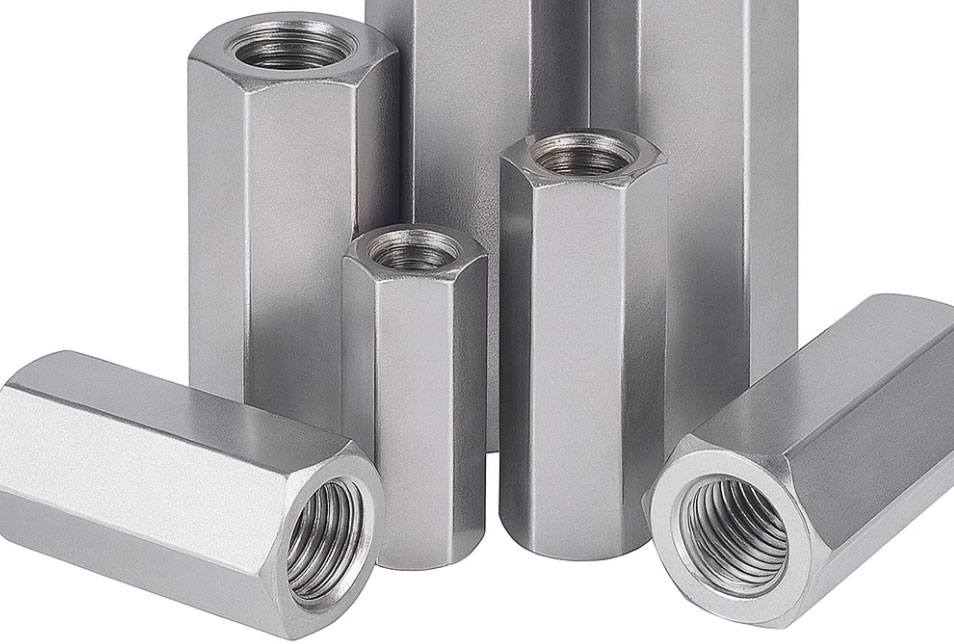
A coupling nut (also called an extension nut) is a long hexagonal or cylindrical nut used to connect two male threaded fasteners, typically threaded rods or studs. It allows for the extension of threaded components in structural, mechanical, and plumbing applications.
Material
Stainless Steel
Composition
18% Cr, 8% Ni – A2-70 (metric)
Yield Strength (MPa)
1000 Max
Hardness (HB / HRC)
~300 HB / 32–35 HRC
Let’s Work Together
Send us a message to have all your questions answered about Couplings