

Fasteners for the Engineering Sector
The engineering sector encompasses civil, mechanical, electrical, structural, and industrial engineering — each requiring fasteners that meet specific performance, safety, and structural demands. These fasteners must offer reliability, load-bearing capacity, corrosion resistance, and precision, tailored to the type of load, environmental exposure, and design application.
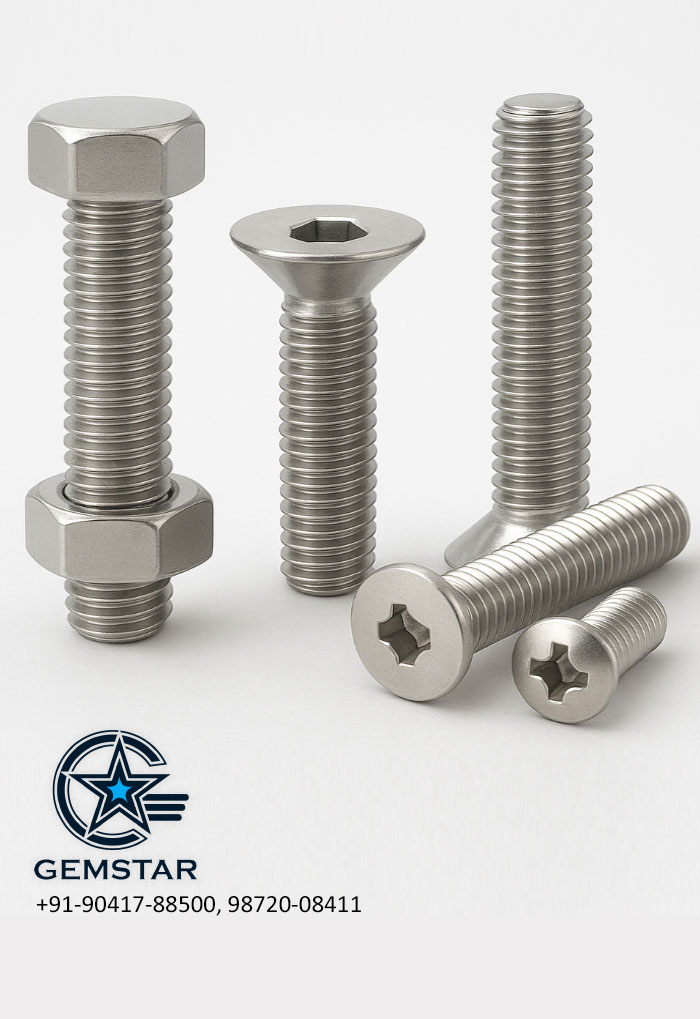
In the intricate tapestry of the engineering sector, where civil, mechanical, electrical, structural, and industrial disciplines converge, fasteners emerge as unsung heroes that hold together complex systems with precision and reliability. Hex bolts and hex screws stand as stalwart champions in this realm, expertly designed to withstand heavy loads while offering versatility across various structures. Meanwhile, socket head cap screws elevate fastening technology with their sleek profiles and high-torque capabilities, making them indispensable in applications demanding intimate detail orientation. Stud bolts and threaded rods extend their reach into deep foundations or vital assembly points; they serve critical roles in sustaining tension under dynamic conditions. Accompanying these robust components are nuts from standard hex to lock mechanisms like Nylock and dome styles each providing essential security against loosening forces over time. Adding another layer of protection is a diverse array of washers: flat ones disperse load evenly while spring washers deliver resilience under vibration; Belleville washers cater to specific preload requirements within sensitive assemblies.
Common Fasteners in Engineering Applications
| Fastener Type | Common Uses |
| Hex Bolts / Hex Screws | Structural frameworks, machine assemblies, foundation anchoring. |
| Socket Head Cap Screws | Equipment, dies, and compact machinery. |
| Stud Bolts / Threaded Rods | Pipe flanges, electrical panels, foundation connections. |
| Nuts (Hex, Nylock, Lock, Dome) | Paired with bolts for secure joints in vibrating or structural settings. |
| Washers (Flat, Spring, Belleville) | Load distribution, locking, and thermal movement absorption. |
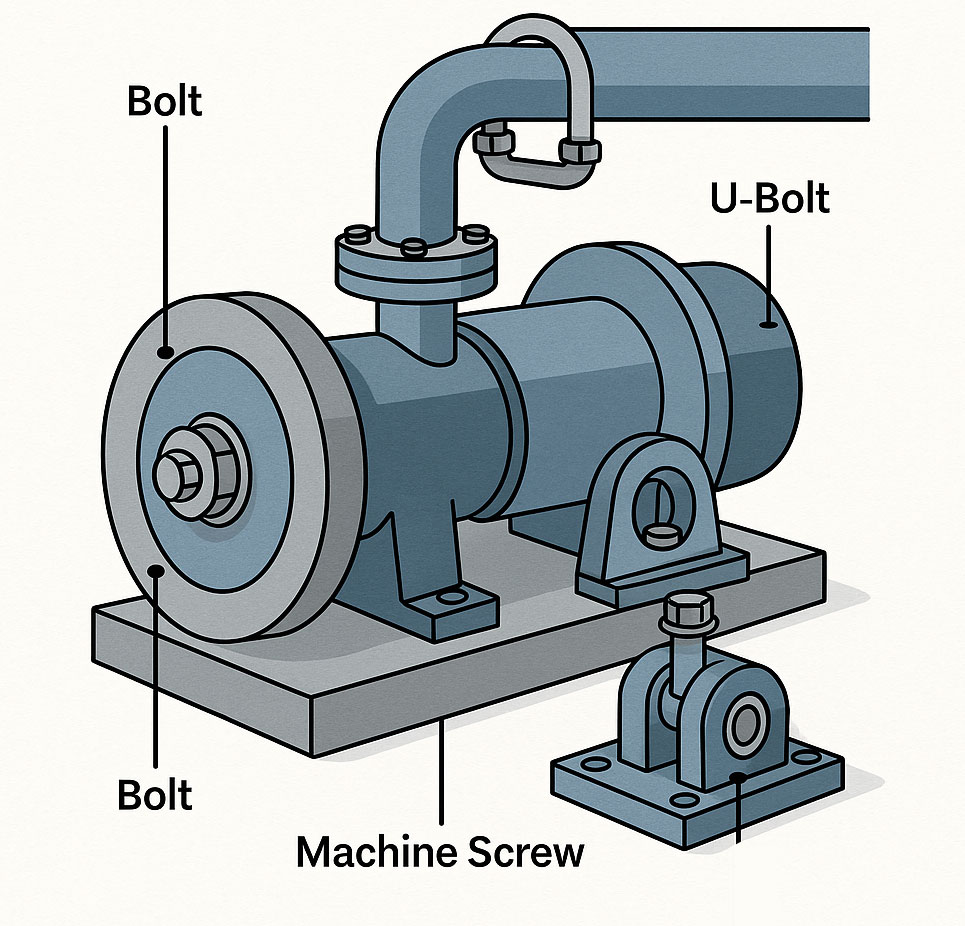
| Anchor Bolts / J-Bolts / U-Bolts | Securing machines, structures, and pipe systems to concrete. |
| Rivets (Solid, Blind, CSK) | Permanent joints in structures, bridges, and heavy frames. |
| Self-Tapping & Machine Screws | Electrical, control panels, enclosures, and lighter assemblies. |
Applications by Engineering Discipline
Materials & Coatings
| Material | Properties & Use |
| Carbon Steel (Grade 4.6–8.8) | General engineering use. |
| Alloy Steel (Grade 10.9, 12.9) | High-stress, dynamic load applications. |
| Stainless Steel (304, 316, 410) | Corrosion resistance; used in outdoor or chemical environments. |
| Brass / Copper Alloys | Conductivity, used in electrical fastening. |
| Hot-Dip Galvanized Steel | For weather-exposed or structural use. |
| PTFE / Xylan Coated | Low friction, anti-corrosion, and high wear resistance. |
Anchor bolts provide steadfast support for constructions rooting deeply into concrete bases through J-bolts which secure framework effortlessly or U-bolts embracing pipes snugly as if cradling them safely through stress-bearing journeys. In spaces where elegance meets strength yet accessibility is paramount, rivets—whether solid for permanent bonds or blind types facilitating quick installations offer seamless integration without disrupting aesthetics or performance integrity.