

Fasteners for the Pharmaceutical Industry
The pharmaceutical industry demands fasteners that meet the highest standards for hygiene, corrosion resistance, chemical compatibility, and regulatory compliance. These fasteners are used in cleanroom environments, manufacturing equipment, packaging lines, and lab installations—where contamination risk and material integrity are critical concerns.
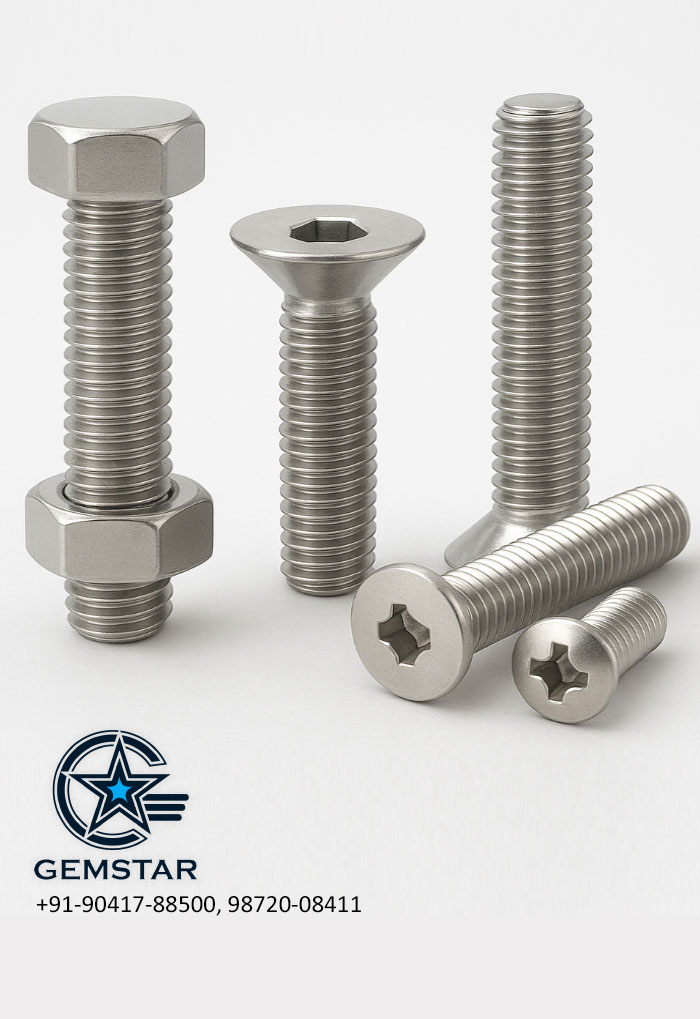
In the rigorous landscape of the pharmaceutical industry, where precision and purity reign supreme, the demand for high-quality fasteners such as hex bolts and hex screws extends beyond mere functionality—they must embody stringent standards of hygiene and durability. Socket head cap screws are engineered to withstand harsh chemical environments without compromising integrity, ensuring that every assembly in cleanroom facilities remains contamination-free. Flat head or CSK screws play a vital role in seamlessly integrating into equipment surfaces while facilitating easy cleaning processes to mitigate any risk of particulate buildup.
Common Fasteners Used in Pharmaceutical Applications
| Fastener Type | Applications |
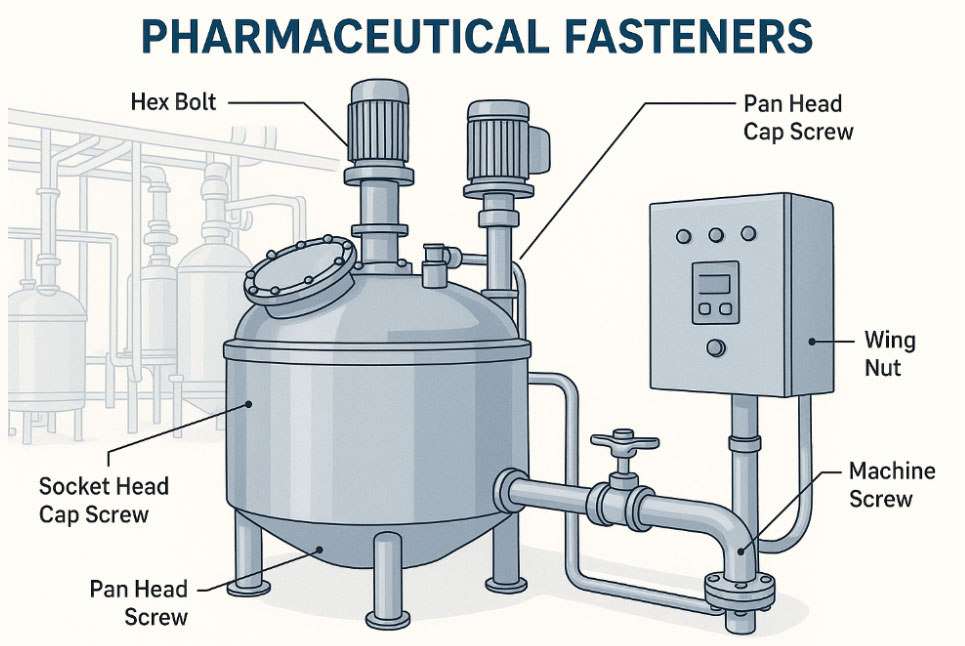
| Hex Bolts / Hex Screws | Equipment frames, stainless structures. |
| Socket Head Cap Screws | Machinery with limited space, clean appearance. |
| Flat Head / CSK Screws | Flush-mounted panels and enclosures. |
| Machine Screws | Control panels, lab equipment, electrical fittings. |
| Threaded Rods / Studs | Support frameworks, cable trays, pipe installations. |
| Nuts (Hex, Dome, Nylock) | Vibration resistance and clean finish. |
| Washers (Flat, Spring, Sealing) | Load distribution and leak prevention. |
| Rivets (Solid, Blind, CSK) | Enclosure panels and permanent joints. |
| Thumb Screws / Knurled Screws | Tool-free access in cleanroom doors, covers. |
Key Requirements for Pharmaceutical Fasteners
Materials & Surface Finishes
| Material / Coating | Key Features |
| Stainless Steel 304 | General use, good corrosion resistance. |
| Stainless Steel 316 / 316L | Superior resistance to acids, cleaning agents, and steam; ideal for sterile environments. |
| Titanium | Lightweight and biocompatible; used in high-purity areas. |
| Hastelloy / Alloy 20 | Highly resistant to chlorides and acidic cleaning agents. |
| PTFE / Xylan Coated Fasteners | Non-stick, chemical-resistant, and easy to clean. |
| Electropolished Finish | Ultra-smooth, reduces microbial growth in cleanrooms. |
| Passivated Stainless Steel | Enhanced corrosion resistance, removes surface contaminants. |
Key Application Areas in Pharma Plants
| Plant Area | Fastener Application |
| Cleanrooms (ISO 5–8) | Smooth, non-particle-shedding fasteners for sterile walls, ceilings, and filters. |
| Processing Equipment | High-strength stainless fasteners resistant to CIP/SIP. | |
| Filling & Packaging Lines | Quick-release and corrosion-resistant fasteners for conveyors, hoppers. |
| HVAC & Ducting Systems | Fasteners for filter housings, ducts, and access panels |
| Lab Furniture & Equipment | Screws and bolts with chemical-resistant coatings or stainless steel. |
| Support & Utility Structures | Threaded rods, U-bolts for pipe and tray support |
Essential accompaniments like nuts—be it hex, dome, or nylock—further enhance reliability by providing secure connections that resist loosening under operational stresses. Washers come into play too; flat washers distribute load evenly across surfaces, spring washers absorb vibration effects, whereas sealing washers guarantee leak-proof seals crucial for maintaining sterilization protocols. Meanwhile, rivets—ranging from solid to blind variations—offer permanent fastening solutions in areas where access is limited yet structural stability cannot be compromised. Each component needs not just to function but also comply with regulatory standards that govern manufacturing practices in this highly regulated field where material integrity safeguards both product efficacy and public health alike.